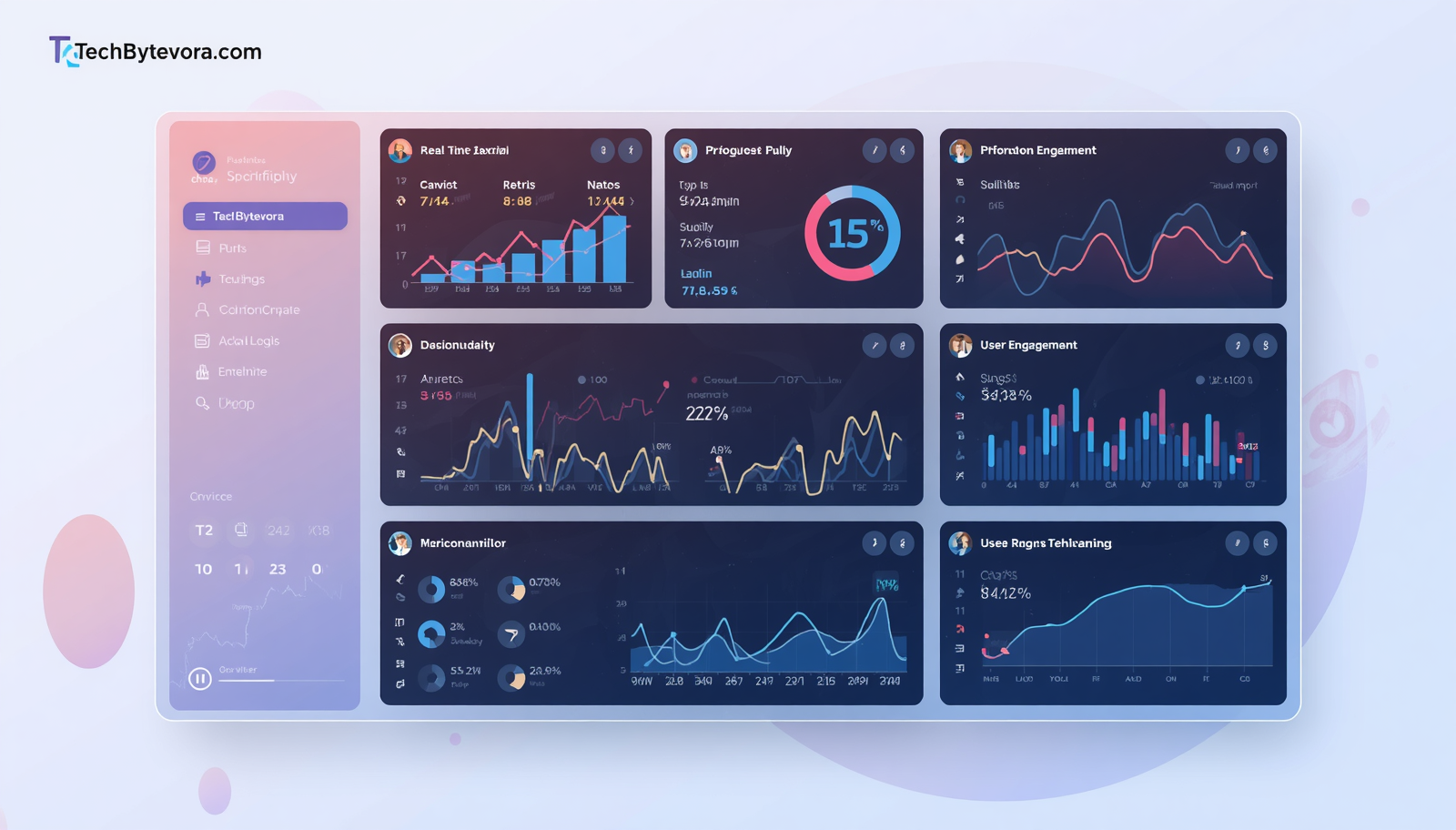
Introduction: Understanding the Core App Dashboard
In today’s fast‑moving digital world, data drives every decision, and applications generate vast amounts of information every second. To manage this effectively, organizations rely on a core app dashboard, which centralizes all critical metrics, analytics, and insights into a single interface. Unlike traditional reports or simple analytic tools, a core app dashboard allows users to monitor, interpret, and act on data in real time, transforming raw information into actionable insights.
A well-designed core app dashboard combines visual analytics, performance monitoring, and user engagement metrics in a way that is both intuitive and informative. It serves multiple stakeholders, from product managers and business analysts to executives, offering a consolidated view of KPIs, trends, and operational health. This centralization reduces confusion, accelerates decision-making, and provides a consistent framework for understanding app performance.
Modern businesses increasingly rely on dashboards to maintain a competitive edge. As applications become more complex and user expectations rise, having a reliable, real-time dashboard is no longer optional; it is essential. This article explores the features, use cases, design principles, challenges, and future of core app dashboards, providing a comprehensive understanding of how they empower businesses to thrive in a data-driven landscape.
What Makes a Core App Dashboard Essential
A core app dashboard is more than just a visual display; it is a decision-making hub. By consolidating data from multiple sources—internal databases, third-party services, and real-time analytics platforms—a dashboard ensures that critical information is always at a user’s fingertips. It reduces the need for time-consuming manual data aggregation and allows teams to focus on interpreting insights rather than searching for data.
The significance of a dashboard extends beyond efficiency. It plays a crucial role in enhancing organizational transparency and accountability. By providing clear visibility into metrics such as active users, revenue performance, engagement trends, and operational health, stakeholders can monitor progress toward strategic goals in real time. It also helps identify bottlenecks or anomalies promptly, ensuring that corrective actions are implemented before small issues escalate into major problems.
A core app dashboard thus bridges the gap between complex datasets and practical decision-making. Its value is especially apparent in environments where rapid responses are crucial, such as e-commerce platforms tracking sales spikes, SaaS providers monitoring uptime, or mobile apps measuring engagement and retention rates. The ability to see data in real time allows organizations to act proactively rather than reactively.
Key Features of a Core App Dashboard
Modern core app dashboards are defined by a set of essential features that enable both comprehensive monitoring and precise analysis. One of the most crucial features is real-time data visualization. Rather than displaying static or outdated information, the dashboard updates continuously, ensuring users see the most current metrics, from user activity to system performance. Charts, graphs, and interactive widgets allow for rapid interpretation of trends and anomalies.
Another vital feature is customizability and interactivity. Users can filter data by date ranges, geographical regions, customer segments, or specific product categories, tailoring insights to their needs. Dashboards also often support drag-and-drop customization, allowing teams to arrange panels, graphs, and KPIs in a way that prioritizes their most critical metrics. Alerts and notifications further enhance functionality, automatically flagging unusual behavior or thresholds that require attention.
Integration capabilities also set a core app dashboard apart. By connecting seamlessly to various data sources, from databases to third-party APIs, dashboards provide a holistic view of organizational performance. This integration ensures that every metric is aligned and contextualized, preventing fragmented or misleading interpretations of data.
Transforming Data Into Actionable Insights
The true power of a core app dashboard lies in its ability to turn complex data into actionable insights. Numbers alone are meaningless without context, but a well-designed dashboard transforms these numbers into narratives that guide decision-making. For instance, pairing user engagement data with revenue metrics allows product managers to see the direct impact of customer behavior on business outcomes.
Visual hierarchy plays a key role in this transformation. By prioritizing the most critical metrics and using intuitive visual cues such as color-coding, trend indicators, and contextual comparisons, dashboards allow users to quickly identify patterns and deviations. A spike in user churn or a sudden drop in session duration becomes immediately visible, prompting timely interventions.
Dashboards also support scenario analysis and predictive insights. By combining historical trends with real-time data, teams can forecast future outcomes, evaluate potential strategies, and optimize operations proactively. This predictive capability turns dashboards from passive reporting tools into strategic instruments for growth and optimization, enabling organizations to make smarter, data-driven decisions.
Real-World Applications of Core App Dashboards
Core app dashboards have proven their value across industries, adapting to diverse operational and analytical requirements. In healthcare, dashboards consolidate patient data, resource availability, and treatment outcomes in one view, helping clinicians prioritize care efficiently. Real-time updates on patient vitals and occupancy rates enable faster interventions, reducing risks and improving patient outcomes.
In e-commerce, dashboards help teams monitor sales, inventory, and customer behavior simultaneously. Businesses can identify trending products, track order fulfillment rates, and adjust marketing campaigns in response to real-time sales data. Similarly, SaaS companies rely on dashboards to track user adoption, feature engagement, and system performance, ensuring that client experiences remain smooth and reliable.
Even in IT and DevOps, dashboards play a critical role. Monitoring server uptime, API latency, error rates, and deployment success metrics helps technical teams address issues before they impact users. Across all these applications, the core value of a dashboard is its ability to centralize complex information, making it accessible and actionable for decision-makers.
Best Practices for Designing Effective Dashboards
Designing an effective core app dashboard requires careful planning and attention to user needs. One of the most important principles is to focus on clarity and simplicity. Each panel or chart should serve a distinct purpose, answering specific user questions rather than overwhelming them with data. Overcrowding dashboards with unnecessary metrics can reduce their effectiveness and discourage adoption.
Visual hierarchy is equally crucial. Critical KPIs should be prominently displayed, supported by contextual data that explains trends or anomalies. Consistent color schemes, intuitive iconography, and accessible design help users interpret information quickly. Interactive elements, such as filter options and drill-down capabilities, further empower users to explore data without leaving the dashboard.
Involving users during the design process is another key practice. Feedback from analysts, product managers, and executives ensures that dashboards meet real-world needs and provide insights that are both meaningful and actionable. Iterative testing and refinement guarantee that dashboards remain relevant as data sources and organizational priorities evolve.
Common Challenges in Dashboard Implementation
Despite their benefits, organizations often encounter challenges when implementing dashboards. One frequent issue is metric overload, where too much data is presented without clear prioritization. This can lead to confusion, misinterpretation, or decision paralysis. Organizations must identify and highlight key metrics that align with strategic goals while relegating less critical data to secondary views or reports.
Another common challenge is poor data integration. Dashboards are only as useful as the accuracy and consistency of their data. Disconnected or incomplete data sources can result in misleading insights and erode trust in the dashboard. Ensuring seamless integration with reliable data systems and maintaining data quality are critical for successful adoption.
User adoption itself can also be a hurdle. Dashboards that are complex or unintuitive may not be utilized fully, reducing their value. To address this, organizations should provide training, documentation, and ongoing support, fostering a culture of data-driven decision-making where dashboards become central tools rather than optional extras.
Read More : Core App Dashboard: Features, Insights & Performance Guide
The Future of Core App Dashboards
The evolution of core app dashboards is closely tied to emerging technologies, particularly AI and machine learning. Advanced dashboards now incorporate predictive analytics and anomaly detection, automatically highlighting deviations or trends that require attention. This transforms dashboards into proactive tools that guide decision-making rather than simply reporting metrics.
Conversational interfaces are another trend shaping the future of dashboards. Users can interact with dashboards using natural language queries, such as asking for the performance of a particular product line or user segment. These conversational capabilities make dashboards more accessible to non-technical users, expanding their impact across organizations.
The integration of mobile and wearable technologies also ensures that dashboards can be accessed anywhere, at any time. With these advancements, core app dashboards are becoming smarter, more responsive, and more user-centric, enabling organizations to stay ahead in an increasingly data-driven business landscape.
Conclusion: Maximizing Value Through Core App Dashboards
A well-designed core app dashboard is a cornerstone of modern data-driven organizations. By centralizing key metrics, providing real-time insights, and enabling interactive exploration of data, dashboards empower stakeholders to make informed decisions quickly. Their impact spans industries, from healthcare and retail to IT and SaaS, demonstrating versatility and critical importance.
Success lies not only in the data presented but also in how dashboards are designed, integrated, and maintained. Clarity, customization, user involvement, and adherence to best practices ensure that dashboards fulfill their potential as strategic tools for performance optimization and operational excellence. As technology continues to advance, the role of the core app dashboard will only expand, solidifying its place at the heart of data-driven decision-making in the modern enterprise.